
Commentary
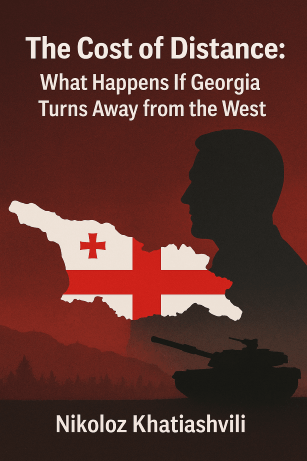
The Cost of Distance: What Happens If Georgia Turns Away from the West?
“Remind Russia every Day: You are an Occupier!” These words of Dr Alexander Rondeli — one of Georgia’s most visionary thinkers and masterminds of Georgian international relations — remain as urgent today. For Rondeli, history was not a museum piece but a living warning. He was always reminding us during his lectures that the past repeats itself most cruelly when nations fail to heed its lessons. The lesson in Georgia’s case is clear: Russia intervenes whenever the West turns a blind eye.
Georgia finds itself at a historic crossroads once again today. The ruling party, Georgian Dream, has made conscious efforts to separate the nation from its true friends, which include NATO, the US, and the EU. Authoritarian laws, the repression of civil society, restriction of opposition parties, the open hostility toward pro-Western NGOs and media — these are not the policies of a government aspiring to Europe. Moreover, the consequences of this drift are not theoretical. If Georgia is severed from the West, it will not linger in some imagined “neutral” space. History shows what happens when Georgia is isolated: we are swallowed by an empire. That empire has always been Russia. And if Georgia falls again, the damage will not stop at Georgian borders — it will destabilise the whole Black Sea and Caucasus regions, undermine NATO’s security, weaken Ukraine, and embolden authoritarian powers. The choice for Georgia is existential. The choice for the West is strategic.
Georgia’s European Roots: History as Compass
Some sceptics argue that Georgia’s aspirations toward Europe are merely a post-Soviet era invention. Nothing could be further from the truth. Georgia has very deep historical roots with Europe, which dates back centuries. Georgia was among the first nations in the world to declare Christianity the official state religion in the fourth century. That decision placed Georgia’s institutions, morals, and culture firmly inside the orbit of European civilisation. Georgia implemented impressive reforms in the 12th century under King David IV, creating robust institutions and a long-lasting state. The period of the Golden Age of Georgia is related to the first Queen of Georgia. Georgian democracy outperformed many in Europe in 1918, when Georgia briefly gained independence as the First Republic: six women served in the Constituent Assembly at a period when women in numerous European nations were still unable to vote.
It was Europe’s indifference, not Georgia’s weakness, that led to the catastrophe of 1921, when Soviet soldiers invaded and destroyed the Georgian democratic republic. Georgia would probably be seated in the European Union and NATO now if the West had stood up for Georgia back then.
This historical arc is not romantic nostalgia. It is evidence of continuity. Georgia has always belonged to the European family. And whenever that bond is severed, Russia devours us.
Independence Restored, Chaos Unleashed
A second chance was presented with the fall of the Soviet Union in 1991. But chaos gave birth to a chance. Civil war, Moscow-sponsored separatist wars in Abkhazia and South Ossetia, economic collapse, civil unrest, reliance on energy, corruption, and an almost destroyed state were all existential threats to Georgia. The Western world reached out at this crucial juncture. In order to keep Georgia afloat, the US and Europe established embassies, acknowledged Georgia’s independence, and gave help. German Foreign Minister Hans-Dietrich Genscher and U.S. Secretary of State James Baker arrived in Tbilisi in 1992 as Georgia was bleeding from the civil war. Their visit made it clear that Georgia was important and that the West would not desert us. In the same year, the European Union and USAID started projects in Georgia, offering millions in desperately needed aid. Thousands of internally displaced people who had fled the fighting areas were fed and supported by humanitarian supplies from both sides of the Atlantic. Georgia was progressively included into the global system at the same time, joining the UN, the OSCE and later the CoE. In 1994, it took the first steps towards joining NATO by joining the Partnership for Peace program. Without this lifeline, Georgia would have remained a failed state. With it, we began to reform — fragile, imperfect, but determined.
Russia’s Shadow: The Pattern of Subversion
But Moscow never let go. In the early 1990s, Russia armed separatists in Abkhazia and South Ossetia, driving hundreds of thousands of Georgians from their homes. It wielded energy blackmail, cutting off supplies in the dead of winter to extract political concessions. It even supported coup attempts, seeking to topple Georgia’s leaders — from Zviad Gamsakhurdia to Eduard Shevardnadze. The pattern was unmistakable: Moscow viewed Georgia’s independence not as a sovereign right but as a temporary inconvenience. That logic culminated in 2008, when Russia once again invaded, this time occupying Abkhazia and South Ossetia. To this day, 20 percent of Georgia’s territory remains under Russian military occupation. Barbed wire fences inch forward each year, slicing through villages, while kidnappings of Georgian citizens have become routine. This is not a frozen conflict. It is slow-motion annexation.
The Reformist Era: Proof of Western Choice
And yet, when Georgia chose the West, the results were transformative. Through painful reforms, Georgia became a leader in anti-corruption, governance, and economic modernisation. Various international high-ranking institutions hailed the progress. NATO praised Georgian military contributions, and Georgian troops fought alongside Americans and Europeans in Iraq and Afghanistan. Georgia proved that a small state, once labelled “failed,” could become a regional model.
The West benefited too. Georgia became the anchor of the Black Sea’s pro-Western flank. Its pipelines — the Baku–Tbilisi–Ceyhan oil pipeline and the Baku-Tbilisi-Erzurum gas pipeline — helped reduce Europe’s dependence on Russian energy. Geography made Georgia the linchpin of the Middle Corridor, the trade and transit route connecting Europe to Central Asia and beyond, bypassing both Russia and Iran. Georgia showed what partnership with the West could achieve.
However, today, this progress is under mortal threat — not from Moscow’s tanks, but from the deliberate choices of Georgia’s own government. The ruling Georgian Dream party has established a set of repressive tactics. Authoritarian-style laws, other measures and legislative amendments that weaken the protections of public servants, civil society, and independent media are the most obvious examples. These laws and other steps that suspended the EU integration path have led to large protests in Georgia and criticism from other countries, but the government still stands firm, viewing its own people as enemies rather than partners in the country’s democratic future. People who support the West are harassed and shut down, and democratic institutions are slowly being destroyed. But at the same time, Georgian Dream has taken steps on purpose to stop the country from moving towards the West. For example, it has questioned the country’s membership in the EU, slowed down cooperation with NATO, and spread more anti-Western speech and propaganda. With each move, Georgia moves farther away from its road to the Euro-Atlantic and further away from other countries. Instead of anchoring the nation firmly in the West, the government promotes a so-called “multi-vector” policy — in reality, nothing more than a dangerous drift away from the democratic world. This is not a policy nuance. It is strategic suicide. For Georgia, every step away from the West is a step into Moscow’s embrace. Neutrality is an illusion. History proves the point: whenever Georgia has been cut off from Europe, Russia has consumed us.
Why the West Needs Georgia — and Why Georgia Cannot Survive Without the West
Some may ask: Why does Georgia matter so much? The answer lies in three interlinked dimensions — security, energy, and credibility. If Georgia falls into Moscow’s orbit, NATO’s entire Black Sea flank would collapse, Ukraine’s rear would be exposed, and Russia would gain strategic depth to pressure both the South Caucasus and Eastern Europe. At the same time, the Middle Corridor, which carries Caspian energy toward Europe, would collapse, turning the dream of diversifying away from Russian oil and gas into a fantasy. And maybe most dangerously, giving up on Georgia would destroy the West’s reputation. It would send a scary message to Eastern Europe and the Caucasus that Western promises can be broken. At the same time, it would give Russia and other autocratic states more confidence to push back harder against the rules-based order. It would be terrible not only for Georgia but also for the safety and integrity of the whole transatlantic alliance.
For Georgia, losing the West is not simply a matter of political orientation. It would mean the loss of the only viable shield against annihilation. Without Western support, Georgia would face a security vacuum, standing alone against Russia — a country that has already invaded, occupies 20 percent of Georgian territory, and continues its creeping annexation. History provides a stark warning: when Georgia’s First Republic was abandoned in 1921, it survived barely three years before Soviet troops marched in. Today’s Russia is no less imperial. Cut off from NATO, the US and the EU, Georgia would be defenceless, and absorption into Moscow’s sphere would not be gradual — it would be swift and total.
The consequences would extend far beyond security. Georgia’s transformation from a “failed state” in the 1990s into a reform success story was made possible by Western markets, aid, and investment. Should such connections break down, Georgia would revert to its reliance on Iran and Russia. Institutions would deteriorate, corruption would thrive, jobs would go, and economic instability would increase. Without the West, Georgia would be compelled to fall back into the poverty and dependence that Moscow enjoys by keeping its neighbours.
The destruction of freedom and democracy would be as destructive. For many years, the EU and NATO have supported free and fair elections, human rights, and the rule of law as external pillars for Georgia’s democratic growth. Without them, the nation would veer closer to Belarusian or Russian totalitarianism. The opposition would be decimated, the media would be silenced, and civil society would be annihilated. In just ten years, the accomplishments of a generation of Georgians who battled, demonstrated, and gave their lives for democracy will be lost.
Losing the West would also mean regional isolation. Georgia’s unique role in the Black Sea region and as a vital link in the Middle Corridor is possible only because the country is trusted by Western partners. If Georgia drifts away, these projects will bypass us, shifting instead through Armenia, Azerbaijan, or routes favoured by China. Georgia would lose its strategic importance and sink into irrelevance on the regional map.
Finally, the gravest consequence would be borne by the people themselves. The human cost of losing the West could be catastrophic. The Kremlin would not hesitate to use force again if Georgia stood alone. Another war would mean further occupation, new waves of displacement, and perhaps the loss of what remains of Georgian sovereignty. For a small nation, the stakes are existential — not only politically, but also demographically and culturally.
Conclusion: History’s Warning
History shows a relentless pattern: Russia has always tried to weaken Georgia, undermine its sovereignty, and pull it back into its sphere of influence. From the Soviet occupation of 1921 to the wars in Abkhazia and South Ossetia in the 1990s, to the invasion of 2008 and today’s creeping occupation, Moscow’s ambitions have never changed. What has also remained constant is the decisive role of the West. Whenever Georgia has drawn closer to Europe and the United States, it has found the strength to reform, to resist, and to build a democratic future.
That is why today’s drift away from the West is so dangerous. Distancing from Europe and the United States does not create “neutrality.” It simply creates a vacuum that Russia is eager to fill. Every step away from the West means greater vulnerability to Moscow’s pressure and greater risk to Georgia’s sovereignty and democracy.
The lesson is clear: Georgia cannot survive without its Western allies, and the West cannot afford to lose Georgia. History is repeating itself — and the question every friend of freedom must now ask is urgent and simple: how can Georgia’s democracy be protected before it is too late?
This article is dedicated to the memory of my great teacher, Dr Aleksandre Rondeli, whose wisdom, mentorship, and unwavering belief in Georgia’s European destiny remain a source of inspiration for generations.
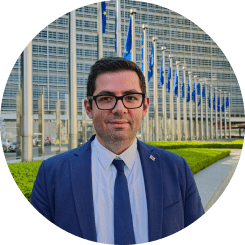
Nikoloz Khatiashvili
Nikoloz is a former diplomat and expert in international security, democracy, and transatlantic relations. He has over 18 years of experience, including senior roles at the Ministry of Foreign Affairs and the Parliament of Georgia. His work focuses on democracy, hybrid warfare, and Georgia’s integration into the EU and NATO.