
Opinion
Papers
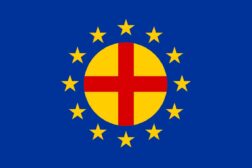
The Pan-European Movement: From Vision to Reality
The Beginning
The pan-European movement began with the founding of an association in Vienna in 1922, which was the precursor to the broader Pan-European Union. Austrian politician, philosopher and writer Count Richard von Coudenhove-Kalergi established the association to promote the idea of European political and economic integration, aiming to unite European countries to prevent future wars.
In 1922, Coudenhove-Kalergi wrote in an article for the Neue Freie Presse: “Continental Europe, from Portugal to Poland, will either unite into a superstate or face political, economic, and cultural decline within this century.”
His goal was to shake up the European statesmen, but his call for action did not resonate at the time.[i]
However, the young aristocrat was determined, and a year later, in 1923, he published a book, Paneuropa, a pioneering work that advocated for the political, economic, and military unification of Europe[ii]. Through this book, he presented a vision for a united Europe, arguing that while Europe existed as a cultural and geographical entity, it lacked political unity. Coudenhove-Kalergi believed that only through European integration could Europe prevent future wars and secure lasting peace. The key to Coudenhove-Kalergi’s Pan-Europe was democracy; Pan-Europe would be open to liberal democratic states[iii]. The book attracted huge attention from intellectuals, political leaders, and artists, helping to fuel the growth of the Pan-European movement. Among the prominent members of the Pan-European Union were Albert Einstein, Thomas Mann, Konrad Adenauer, Charles de Gaulle, Georges Pompidou, and many others.
At the heart of Coudenhove-Kalergi’s vision were Christian values, freedom, and social justice, which he saw as the bedrock of European strength. He envisioned a Pan-European alliance where all member states would have equal rights, with particular attention to the protection of national minorities. He used Belgium and Switzerland as models of peaceful multinational coexistence. However, his framework excluded Britain and Russia. He viewed Britain as an independent power and believed that Russia, whether under Tsarist or Soviet rule, would always seek to dominate Europe. What a sharp insight! In exchange for a slight limitation of sovereignty, Coudenhove-Kalergi argued that European nations would gain economic prosperity and enduring peace.
The Road to European Integration
The Pan-European movement quickly gained momentum, particularly among intellectuals, artists, and progressive politicians. By 1929, it formally proposed the creation of a European Federation of Nations under the League of Nations. The proposed federation would cover various sectors, from customs regulations to political agreements, and its primary goal was to secure peace and stability. While the federation was not intended to hold governing power, it was meant to function as a sort of cooperative framework subordinate to the League of Nations.
Despite its ambitious vision, the proposal failed to gain widespread support, and Europe soon sank into another devastating war. This validated Coudenhove-Kalergi’s warning that without integration, Europe could not maintain peace. Nonetheless, his movement laid the ideological and political groundwork for the eventual unification of Europe. Winston Churchill, in his 1946 speech at the University of Zurich, advocating for European integration, acknowledged the contributions of the Pan-European movement.”[iv]
Coudenhove-Kalergi’s vision ultimately materialized, beginning with the establishment of the Coal and Steel Community in 1951, followed by the European Economic Community in 1957, and culminating in the European Union in 1993 with the entry into force of the Treaty on European Union.
After Coudenhove-Kalergi’s death, Otto von Habsburg, the last Crown Prince of Austria-Hungary, took on a pivotal role in the movement, becoming President of the Pan-European Union in 1972. Otto von Habsburg was deeply committed to the idea of European unity and worked tirelessly to promote the Pan-European cause. Under his leadership, the organisation gained prominence and expanded its influence across Europe. He developed the Pan-European Union into a mass movement for a free, Christian, social and united Europe and made it the advocate for the people of Central and Eastern Europe suppressed by communist regimes.[v] Otto von Habsburg was a key figure in promoting the European integration process and the idea of a Europe without borders. He played a pivotal role in shaping the discourse around the future of Europe and was a vocal advocate for democracy, human rights, and European values. His efforts were instrumental in bridging the divide between Eastern and Western Europe, particularly in the context of the Cold War.
Moreover, Otto von Habsburg was active in diplomatic circles and worked to influence political leaders across Europe. His work in the Pan-European movement helped lay the intellectual and political foundations for the eventual formation of the European Union. He remained a staunch supporter of European unity until his death in 2011.
The Pan-European Picnic: A Crack in the Iron Curtain
In addition to shaping the early foundations of European unity, the Pan-European movement played a crucial role in one of the most symbolic moments of the Cold War—the Pan-European Picnic of 1989. By the late 1980s, political tensions in Central and Eastern Europe were nearing a breaking point. The Soviet Union’s perestroika reforms emboldened dissidents, and a wave of change began sweeping through the Warsaw Pact countries. 1989 proved to be a year of transformation: Polish Solidarność won seats in parliament, the Berlin Wall would soon fall, and Communist leaders across Eastern Europe were losing their grip on power.
Amidst these revolutionary changes, a seemingly ordinary event would turn into a historic turning point—the Pan-European Picnic on 19 August 1989. Earlier that year, Hungarian and Austrian officials had symbolically cut a section of the barbed wire along their border, sparking rumours across Europe that a breach in the Iron Curtain had appeared. Thousands of East Germans, under the guise of vacationing at Lake Balaton, flocked to Hungary, hoping to find a route to the West.
During a visit to the University of Debrecen, Otto von Habsburg, the president of the Pan-European Movement, spoke about European integration and the idea of a borderless Europe. Inspired by this vision, Hungarian dissidents proposed a symbolic picnic near the border town of Sopron, where Austrians and Hungarians could meet in a spirit of unity[vi].
What was intended to be a simple afternoon gathering turned into a historic exodus. On the day of the picnic, Hungarian authorities briefly opened the border. Instead of just local participants, hundreds of East Germans surged towards Austria. Over 600 East Germans gained freedom that day, and thousands more lingered, hesitant to believe that no one would stop them[vii].
The Aftermath: The Fall of the Berlin Wall and the Unification of Europe
The Pan-European Picnic was more than just a symbolic gesture; it accelerated the demolition of Communist rule in Eastern Europe. Shortly after the picnic:
- The Austro-Hungarian border was fully opened.
- On 11 September 1989, Hungary allowed 30,000 more East Germans to cross into Austria.
- On 17 October, East German leader Erich Honecker was ousted.
- On 9 November, the Berlin Wall fell, marking the end of decades of division.
Though questions remain about why the escape went unchallenged—whether Hungarian officials turned a blind eye or whether there were behind-the-scenes negotiations—one fact is clear: the Pan-European Picnic dealt a significant blow to the Iron Curtain and helped hasten the reunification of Germany and Europe. Even Erich Honecker, the last leader of the GDR, after his dismissal, acknowledged, “This Habsburg drove the nail into my coffin.”[viii]
The Lasting Legacy of the Pan-European Movement
From Coudenhove-Kalergi’s initial vision of European unity to the historic Pan-European Picnic that symbolically dismantled the Cold War’s barriers, the Pan-European movement has been instrumental in shaping modern Europe. Its Latin motto – In necessariis unitas, in dubiis libertas, in omnibus caritas (eng. unity in necessaries; liberty in doubts; charity in all) – continues to resonate as a reminder of the enduring importance of unity, freedom, and charity in the ongoing development of Europe.
Paneuropa Today
The International Pan-European Union operates through a well-established institutional framework, with its headquarters located in Paris. The Union is led by President Alain Terrenoire and Secretary General Pavo Barišić, and is supported by a Presidency Council composed of prominent political figures and intellectuals. The Presidency Council provides strategic direction and oversees the Union’s activities[ix].
The Pan-European Union has national offices in several European countries, including Austria, Croatia, Germany, Hungary, Bulgaria, and Romania, among others. These offices coordinate efforts locally, engage with policymakers, and promote the Union’s objectives in their respective countries. The Union’s structure allows for both centralized decision-making and localized implementation of its policies, ensuring broad participation in its mission to foster European unity.
The Union also collaborates with academic institutions, think tanks, and political organizations, acting as a bridge between intellectual movements and political actions. Through this institutional framework, the Pan-European Union remains an influential actor in shaping the future of Europe, advocating for integration, peace, and democratic governance.
A Continued Commitment to European Unity
The Pan-European Union remains deeply committed to European integration and the promotion of democratic values.
In October 2024, the Presidency Council met in Split, Croatia, to discuss the political situation in Georgia. They expressed concern over the recent parliamentary elections in the country, which they deemed rigged, and sent a letter of support to Georgian President Salome Zourabichvili, calling for the rectification of the election results to align with democratic principles[x]. This letter reaffirmed the Pan-European Movement’s dedication to defending democratic values and supporting European integration, ensuring that the vision first articulated by Coudenhove-Kalergi over a century ago remains as relevant and vital as ever.
In addition to this, the Union has continued to advocate for a united Europe by hosting discussions on the importance of European cohesion, particularly with regard to smaller nations in the EU’s future. The movement has also worked on projects related to the unification of the Balkans and the importance of democratic processes in countries aspiring to join the EU, providing political support and educational resources to strengthen European unity. Through these ongoing activities, the Pan-European Union continues to pursue its mission of promoting peace, democracy, and solidarity across Europe.
[i] PANEUROPA, n.d. Geschichte der Paneuropa-Bewegung [online]. https://www.paneuropa.at/philosophie/geschichte/
[ii] COUDENHOVE-KALERGI, Richard von, 1923. Pan-Europa. Wien: Pan-Europa Verlag.
[iii] KOSTAKOPOULOU, Dora, 2019. Had Coudenhove-Kalergi’s Pan-Europa Foreseen the United Kingdom’s Nationalist Hour (Brexit)? European Papers [online]. 2019, Vol. 4, No. 1, pp. 119-132.
[iv] CHURCHILL, Winston, 1946. United States of Europe Speech [online]. University of Zurich, 19 September 1946. The International Churchill Society.
https://winstonchurchill.org/resources/speeches/1946-1963-elder-statesman/united-states-of-europe/
[v] ACTON INSTITUTE, n.d. Otto von Habsburg [online]. [Accessed 31 March 2025]. https://www.acton.org/about/author/otto-von-habsburg
[vi] KIRÁLY, András, 2019. A Day That Changed the Course of History: The Pan-European Picnic and Its Perception Today. Hungarian Review [online]. 22 November 2019. https://hungarianreview.com/article/20191122_a_day_that_changed_the_course_of_history_the_pan-european_picnic_and_its_perception_today/
[vii] HORVÁTH, Eva S., 2014. Another Strange Orban Speech at the 25th Anniversary of the Pan-European Picnic. Hungarian Spectrum [online]. 20 August 2014.
[viii] Joachim Riedl: “Ein Brückenleben. Viele Schnurren und eine Sternstunde. Zum Tode Otto von Habsburgs.” In: Wochenzeitung Die Zeit, Nr. 28, 7 July 2011.
[ix] PANEUROPEAN UNION, n.d. Home [online]
https://www.international-paneuropean-union.eu/index.php/en/
[x] PANEUROPEAN UNION, n.d. Letter to the President of Georgia [online]
https://www.international-paneuropean-union.eu/index.php/en/news/letter-to-the-president-of-georgia
Téa Parulava
Téa is a Georgian journalist, editor, communications expert and blogger with extensive experience in media, cultural reporting, and international relations. Based in Vienna, she works as a correspondent for Georgian media, covering cultural and political developments in Austria, Central, and Eastern Europe. www.euroambebi.eu