
South Ossetia’s 2026 “Presidential Election” and Russia’s Influence in the South Caucasus

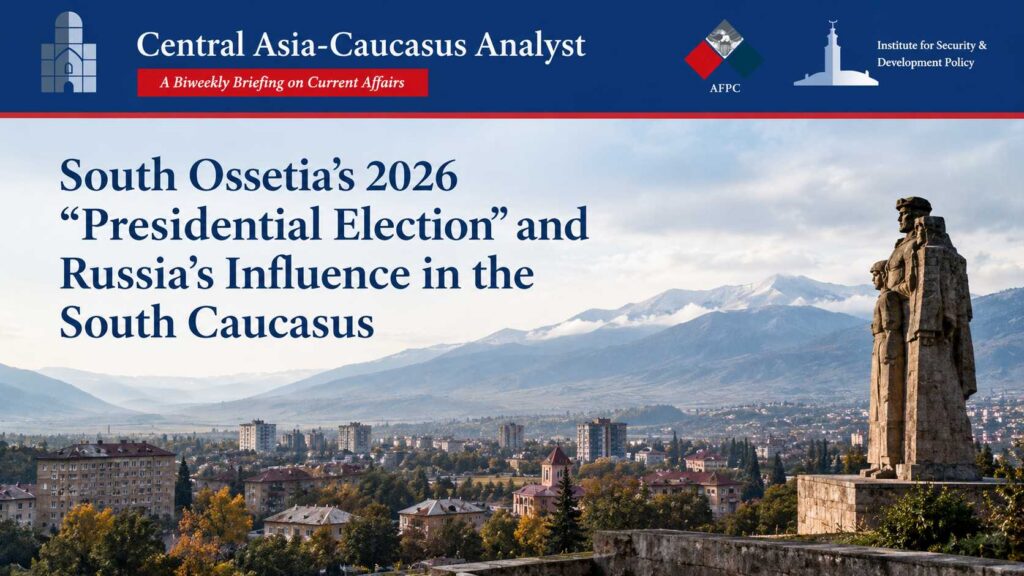
On September 30, 2026, Marat Kambolov was inaugurated in Tskhinvali as South Ossetia’s new de facto “president”, following the “presidential election” of September 18. Representatives of Russia, Venezuela, Nicaragua and breakaway Abkhazia attended the ceremony. Georgia and the EU rejected the vote as illegitimate and without legal effect. The transition illustrates South Ossetia’s deepening political, security and economic integration with Russia. The election’s significance lies in the consolidation of an established trajectory. Kambolov’s career in Russian state institutions and rapid emergence within the de facto administration reflect the territory’s dependence on Moscow for political support, security and economic viability. For Georgia, this dependence poses a continuing challenge to sovereignty and national security. Regionally, South Ossetia remains a strategic foothold where Russian military power, unresolved territorial disputes, limited international oversight and vulnerabilities associated with informal cross-border activity intersect.