Statement on the Anniversary of the 31 March Referendum on the Restoration of Georgia’s Independence
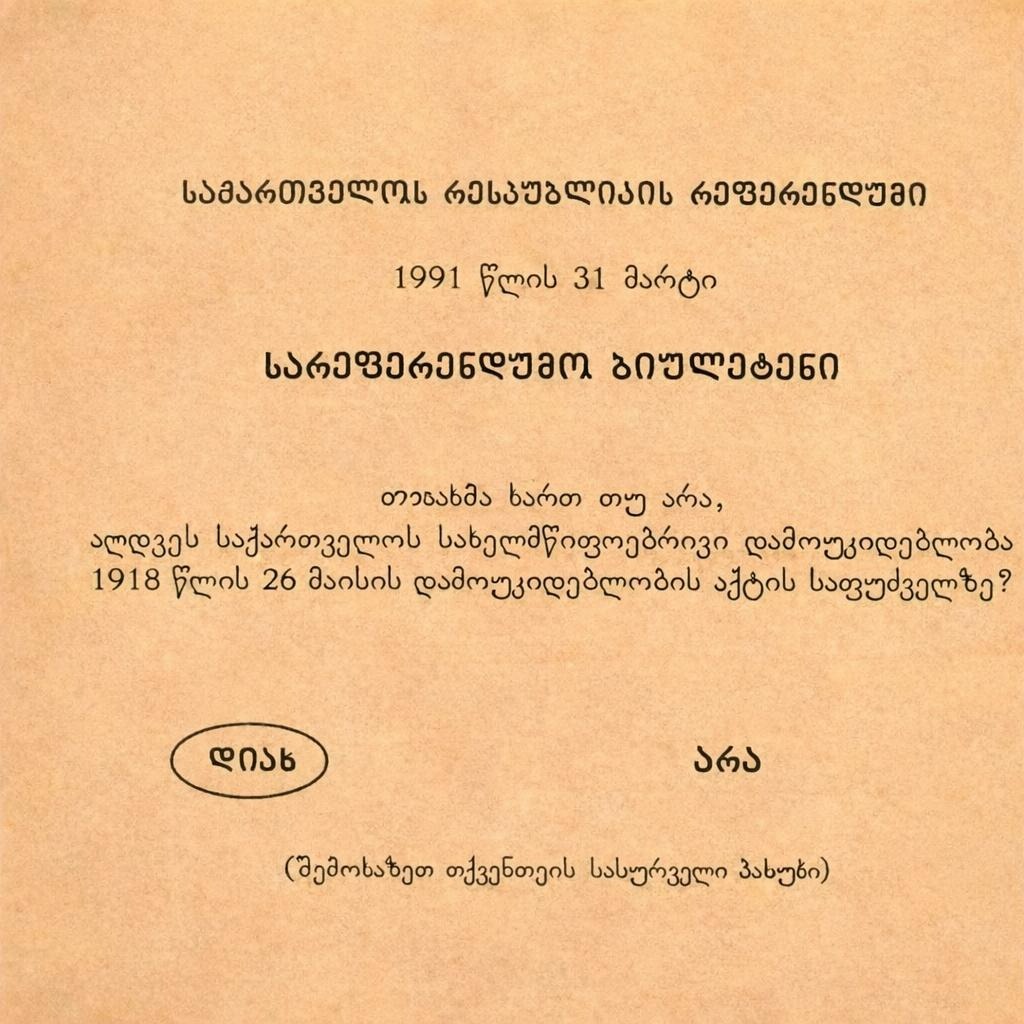
On 31 March 1991, the people of Georgia made a historic and courageous decision. Through a national referendum, an overwhelming majority voted in favour of restoring the country’s independence, based on the Act of Independence of 26 May 1918. This referendum became one of the most important democratic expressions of the Georgian people in modern history and laid the foundation for the re-establishment of Georgian statehood.
The referendum took place in a very difficult political and economic environment, during the final period of the Soviet Union. Despite pressure, uncertainty, and instability, the citizens of Georgia clearly expressed their will to live in an independent, democratic, and European state.
The results of the referendum were decisive: more than 90 percent of participating voters supported the restoration of independence. Shortly afterwards, on 9 April 1991, the Supreme Council of Georgia declared the restoration of the country’s independence, marking the beginning of a new chapter in Georgia’s modern history.
For Georgia, independence was not only about sovereignty and statehood. It was also a civilizational choice — a return to the European political, cultural, and democratic space to which Georgia historically belongs.
Today, more than three decades later, the spirit of the 31 March referendum remains highly relevant. However, Georgia currently faces a serious political challenge: the country’s leadership has increasingly deviated from the path of European and Euro-Atlantic integration, despite the clear and consistent will of the overwhelming majority of the population to join the European family. This widening gap between society’s aspirations and the government’s political course raises serious concerns about democratic governance, strategic direction, and the country’s long-term future. At the same time, Georgia continues to face external pressure, including the ongoing Russian occupation of Georgian territories, which makes unity around the country’s European choice even more important.
The EU Awareness Centre believes that the legacy of the 31 March referendum is not only historical but also political and moral. It represents the clear will of the Georgian people to live in a free, democratic, and European country. This choice remains unchanged.
On this anniversary, we reaffirm our respect for the decision made by the Georgian people in 1991 and express our support for Georgia’s continued democratic development, European integration, and sovereignty.
The will expressed on 31 March 1991 continues to guide Georgia’s European future.