
Russia’s Kaliningrad Warning: A Case Study in Cognitive Warfare
Download PDF
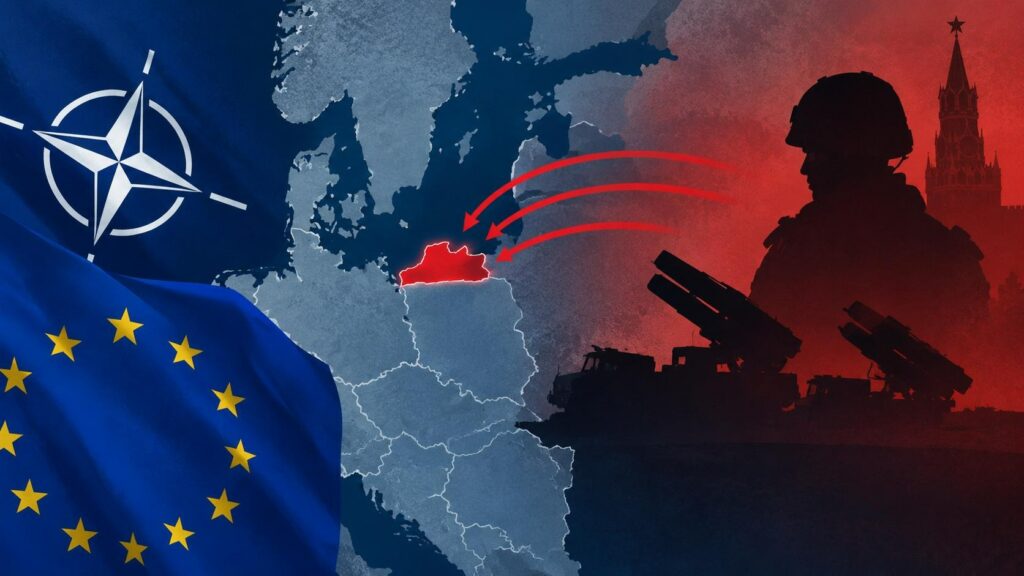
On 28 September 2026, the Russian Embassy in Belgium released a highly vigorous statement in which it accused NATO and its member states of worsening the military and political situation surrounding Russia’s Kaliningrad Region; it stated that NATO was drawing up scenarios for isolating the region, claimed that the Alliance’s military actions were becoming more aggressive, and declared that Russia would be ready to use its entire arsenal should any of the NATO countries try to cut Kaliningrad off from the rest of Russia.
The statement is not simply a warning about military developments but also an effort to determine how those developments are understood and by whom; that is why the EU Awareness Centre has given it due attention. We monitor foreign information manipulation and interference, as well as the wider area of cognitive warfare, since these activities increasingly influence how Europeans perceive security threats well before any crisis takes place. Most talk on manipulation centres on fabricated stories, doctored images, or anonymous bot networks. This statement isn’t one of those. It is an official diplomatic document released openly in the name of a state, and much of it refers to real events. That is precisely what makes it so instructive. It shows how framing, omissions, and the sequence of cause and effect can guide interpretation without outright fabrication.
A genuine security problem.
Kaliningrad is a Russian exclave on the Baltic Sea, situated between Poland and Lithuania. Its position has always made it strategically important. This tactical importance is mutual. Moscow is concerned about the exclave being isolated, while NATO has long worried about the Suwałki corridor, the narrow strip of land between Poland and Lithuania that lies between Kaliningrad and Belarus and is the only land connection for the Baltic states to the rest of the Alliance.
Kaliningrad is also one of the most militarily equipped areas in Europe and hosts the headquarters of Russia’s Baltic Fleet, as well as nuclear-capable Iskander missile systems. It has also been found to be a source of satellite navigation interference that has, on several occasions, disrupted civil aviation in the Baltic area.
NATO has also increased its activities on the eastern side. The Baltic Sentry operation, launched in January 2025, enhanced the Alliance’s maritime presence through frigates, maritime patrol aircraft, and naval drones. This operation followed a specific incident. In December 2024, the Estlink 2 power cable linking Finland and Estonia was damaged, and Finnish authorities detained the tanker Eagle S, a vessel associated with Russia’s sanctions-evading ‘shadow fleet’, in connection with the incident. Baltic Sentry’s official aim is to defend critical undersea infrastructure.
Western rhetoric has at times been sharp. In 2025, a high-ranking commander in the US Army said NATO troops could seize Kaliningrad in a very short time. Statements like this give Moscow material to work with.
It by no means follows that tensions in the Baltic area are imaginary; the region has, in fact, become a theatre of military deterrence and competition.
From military operations to a narrative involving aggression.
The Embassy’s statement makes clear how the events are causally connected: first, NATO’s military actions; then a threat toward Kaliningrad; then measures taken to isolate it; and finally the risk of direct confrontation with Russia.
NATO is introduced as the starting point of the account. Baltic Sentry is not portrayed as a reaction to damaged infrastructure; rather, it is presented as a test of the mechanisms for ‘unilateral blocking of international shipping’. The cable incident which led to the operation is not mentioned at all, nor is Kaliningrad’s own militarisation.
The same event may be termed maritime protection, deterrence, military preparation or a rehearsal of aggression. Although the facts remain the same when the description changes, the political significance assigned to them does change. This is one of the main issues in today’s information struggle. The conflict is not only about what happened, but rather about which causal account the public ends up attaching to it.
Moscow can also point to a previous example. When, in 2022, Lithuania applied EU sanctions to the rail transport of certain goods to Kaliningrad, Russia described this as a “blockade” until the European Commission explained the rules. In Russia’s communications, an administrative dispute concerning the sanctions was treated as proof of hostile intent. This statement follows that logic.
Reversing the security narrative.
The statement uses reversal the most. Three examples show this clearly.
Initially, threat assessments are treated as disinformation. The Embassy regards the warnings that Russia might be in a position to attack a NATO member by 2029 or before as “false information”. These warnings did not come from anonymous commentators; several European intelligence services and defence officials, including Germany’s defence minister, issued them. By describing official threat assessments as propaganda, the Embassy undercuts the analysts rather than addressing the evidence they have presented.
Second, civil preparedness amounts to warmongering. The statement cites the existence of plans for cross-border evacuation of populations ‘in the event of a major crisis’ as evidence of NATO escalation. What governments regard as ordinary work—namely, efforts to protect their citizens—is presented instead as an indication of aggressive intent.
Third, assurances replace evidence. The statement notes that Russia’s leadership has repeatedly said it has no intention of starting a military action and that Moscow’s proposal for written “common security guarantees” has been disregarded. People should remember the previous example. In December 2021, Russia issued draft treaties which required the United States and NATO to provide security guarantees, even as at the same time asserting that it had no plans to attack Ukraine. The full-scale invasion followed two months later. Although this history does not indicate what Russia will do this time, it does show that such assurances and offers previously preceded, rather than avoided, escalation.
Taken together, these reversals give a clear picture: Russia intends to avoid confrontation, NATO is driving the escalation, and whatever Russia does next will be a reaction to an external threat.
The “entire arsenal” warning.
The main warning in the statement is that Russia is ready to use its “whole arsenal” to defend its territory should the NATO countries try to isolate Kaliningrad. The statement does not rule out the use of nuclear weapons. If you compare this wording with Russia’s revised nuclear doctrine from November 2024, you will see that that doctrine has widened the circumstances under which nuclear weapons can be used to include cases of conventional aggression that create a serious threat to Russia’s sovereignty or territorial integrity. Since Kaliningrad is part of Russia, sovereign and separated from the mainland, it clearly falls within that description.
The warning has two aspects. In a military sphere, it signals to NATO planners that Moscow considers Kaliningrad a significant interest. Politically, it targets a larger audience; it deliberately fails to clarify what would constitute an attempt at ‘isolation’. For example, would a blockade, the enforcement of sanctions, a naval exercise, or inspections of vessels in the shadow fleet count? This vagueness increases the perceived risk of nearly any action near the exclave and contributes to public worries about escalation.
The location also matters because Russia closed its permanent mission to NATO in 2021, making the Embassy in Brussels Moscow’s primary channel of communication with the Alliance. The statement states that it has conveyed its position to both the NATO headquarters and the Belgian Ministry of Foreign Affairs and was directed at European governments, NATO officials and the European public, not just at a domestic Russian audience.
This matters in the context of cognitive warfare.
The statement is a good example of cognitive warfare, which involves attempts to shape how governments, the public, and decision-makers perceive a situation, identify threats, assign responsibility, and anticipate consequences.
Cognitive warfare is not simply a synonym for disinformation, since it doesn’t rely on false statements; it can achieve its aims by selectively displaying facts, framing events, attributing responsibility, and shaping expectations. The Kaliningrad statement uses all these techniques: it omits the incidents that led to NATO’s actions, presents its defensive measures as offensive preparations, and positions Russia’s likely response as the final element in a causal sequence that starts with NATO.
Most important of all, it sets the stage for the information environment in relation to future events; in the event of a serious incident taking place near Kaliningrad—for example, a maritime confrontation, an airspace violation or a disruption to transit—Moscow could refer to this statement and say that NATO had been escalating, that NATO had threatened to isolate Russia, that Russia had warned of the consequences, and therefore any Russian response would have been defensive.
The statement doesn’t prove Russia has plans for a specific operation, since that conclusion would require further evidence. The issue is that cognitive warfare can shape how people understand future events before they happen.
Think before you trust: questions to ask.
When you encounter a statement like this, whether from Moscow or anyone else, a few questions help separate the facts from the framing:
- Who is placed at the start of the story? The actor shown taking the first action is usually the one held responsible for what happens afterwards.
- Who is placed at the start of the story? The actor presented as moving first is usually cast as responsible for everything that follows.
- Are the assessment reports being ignored or being responded to? Labelling a threat assessment as ‘disinformation’ is not the same as refuting the evidence it presents.
- What effect does the ambiguity have? Undefined red lines can make ordinary activities seem dangerous.
- What future event is this enabling us to interpret? A warning released today can serve as the “explanation” for an incident tomorrow.
Kaliningrad is a real security problem. That’s why the narratives concerning it deserve careful reading.
The opinions and conclusions expressed are those of the author and do not necessarily reflect the views of the EU Awareness Centre.
© 2026 EU Awareness Centre. All rights reserved.