Independent analysis on European policy, integration, and democratic governance.

On September 1, 2026, The New York Times published an essay by the distinguished Oxford historian Margaret MacMillan under a title that was difficult to ignore: “A New World Order Is Coming. We Aren’t Ready.” I read it with the utmost attention, armed with a…


For most of the last two decades, European cybersecurity law addressed organisations rather than objects. The NIS2 Directive tells hospitals, energy operators and digital infrastructure providers how to manage risk. The 2019 Cybersecurity Act built a certification scheme that companies could use if they chose…


Bulgaria’s new government enters office with something the country has lacked for nearly three decades: a clear parliamentary majority and an equally clear anti-corruption mandate. But with administrative corruption in 2026 at the highest level ever recorded, political will alone will not be enough. If…


Comment on Amb. Tedo Japaridze, “The Anchor before the Vectors”. It is a pleasure to comment on the article of my old friend, Ambassador Tedo Japaridze. In principle, I agree strongly that in the design of foreign policy, any state should have a concept of…


More than a year ago, in a piece published here, I argued that a peace process which excluded Europe risked producing exactly the kind of settlement Europe would later have to live with, and pay for, alone. That warning about exclusion has only grown more…


Every generation inherits a country. More importantly, every generation leaves one behind. Politics, however, rarely encourages such long-term thinking. Public debate is usually consumed by immediate controversies, electoral cycles, tactical victories, ideological battles, and the endless urgency of the present moment. Too often, the preservation…

A look at Regulation (EU) 2024/900 and what it means for political ads online You're scrolling through Instagram the week before an election. A sponsored post appears, backing a candidate you've barely heard of. It's polished, persuasive, and gone the moment you swipe past. Who…

During my tenure as Ambassador of Japan to Georgia from 2017 to 2020, I was fortunate to receive the warm friendship of many Georgian colleagues and friends. My memories of Georgia are sustained not merely by its magnificent history, natural beauty, or iconic wine culture,…

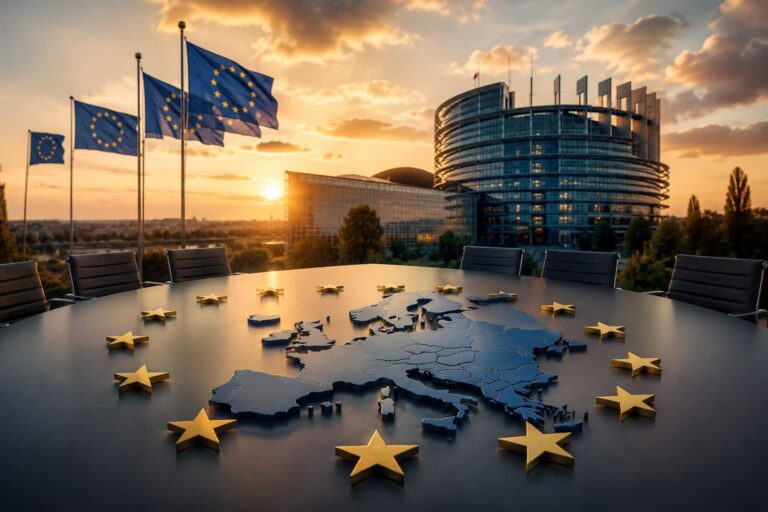
On 18 March 2026, the European Commission tabled COM(2026) 321 — a regulation that would create "EU Inc.", an optional corporate form sitting alongside the twenty-seven national company laws of the member states rather than replacing them. The initiative reflects a broader view in Brussels…

On 8 July 2026, in The Hague, during the 33rd Annual Session of the OSCE Parliamentary Assembly, the Georgian delegation walked out of the session hall in protest when the Assembly adopted the “Hague Declaration,” which also incorporated a resolution initiated by US Congressman Joe…

August 2008 Russo-Georgian war was, by any honest assessment, a strategic disappointment for Moscow. It occupied 18 per cent of Georgian territory, which Russia had already effectively controlled since the early 1990s;
Thirty-five years is a long enough record to learn from. Ambassador Tedo Japaridze, once my boss, mentor and now dear friend, has given us an essay of rare honesty — the honesty of someone who did not merely witness these decisions but shaped them, and…
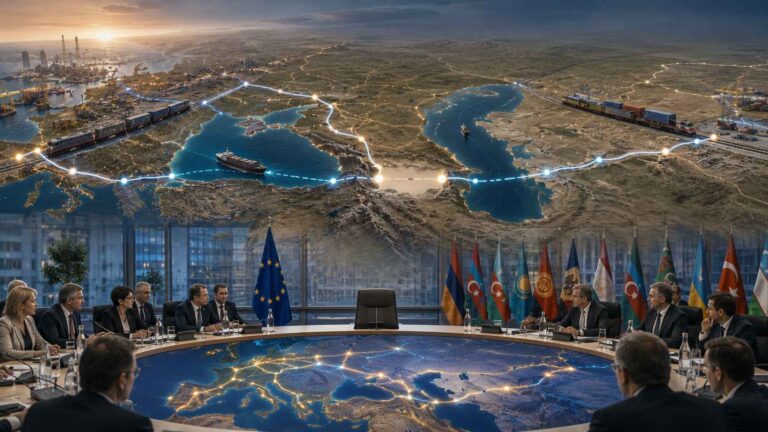
On 23 June 2026, the European Commission brought together transport ministers and senior officials from Central Asia, South Caucasus and Eastern Europe in Brussels to launch the Connectivity Agenda Platform, a framework for coordinating investment along the trade corridor that links the European Union to Central…

The term Foreign Information Manipulation and Interference (FIMI), formalised by the European External Action Service (EEAS), marks a deliberate analytical departure from earlier, narrower concepts. The EEAS defines FIMI as "a mostly non-illegal pattern of behaviour that threatens or has the potential to negatively impact…

A Civilisational Identity, Not a Political Slogan Georgia has always known where it belongs. Long before the European Union existed, long before NATO was founded, Georgians identified with European civilisation and its values. This is not a recent political choice — it is intertwined in…
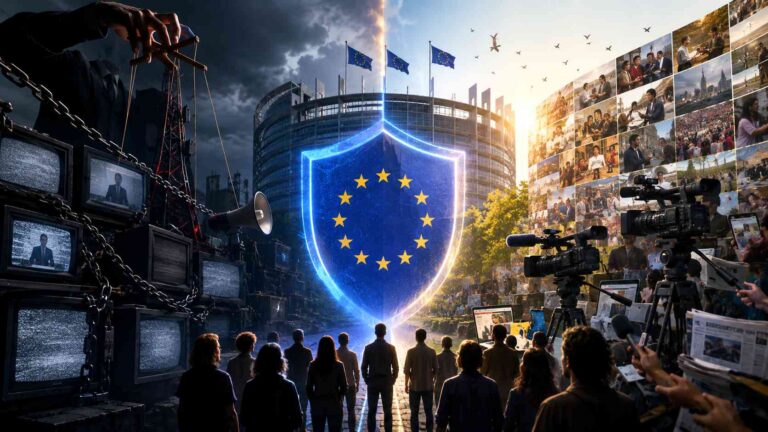
Across the European Union, media pluralism is under simultaneous pressure from two directions: state-driven capture—where governing majorities systematically dismantle editorial independence—and market-driven concentration —where a handful of conglomerates absorb the remaining outlets.