
Europe Should Look Beyond the US Midterms

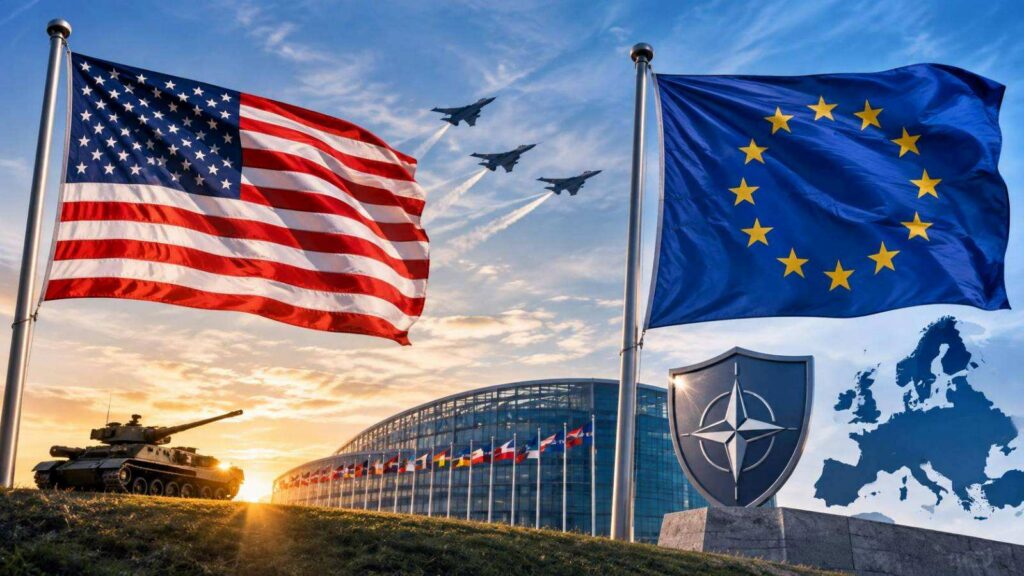
The midterms have changed the balance of power in Washington. Democrats now have the House and the Senate. That puts President Trump in a very different position in the final two years of his term. Congress will have a far greater ability to scrutinise the administration, challenge its legislative agenda and influence decisions on government spending and foreign policy.
Still, Europe shouldn’t take this as a signal that America’s foreign policy will change. In the United States, foreign policy is very much in the hands of the president. He can veto legislation, and Congress needs a two-thirds majority in both chambers to override it. Congress can constrain, delay, and expose, but it can’t set a different course on its own. Europe also shouldn’t assume the 2028 presidential election will restore the transatlantic relationship of the past.
It is worth remembering that the reassessment of America’s commitments did not begin with Trump. Successive administrations have sought to shift resources towards the Indo-Pacific and to focus on competition with China. In 2012, the Obama administration announced the withdrawal of two Army Brigade Combat Teams from Europe in favour of a rotational model. The only thing that reversed that was Russia’s annexation of Crimea in 2014. Trump’s approach is more overtly transactional, but the pressure on Washington to prioritise and expect more from Europe is not unique to one administration or one party. Europe should see it as a permanent strategic shift rather than a temporary aberration.
There is also a more practical reality: the United States is constrained by what it can actually provide, irrespective of political will. Its defence industrial base is under strain from the war in Ukraine, other commitments and the Iran issue. Stocks of advanced missiles and air defence interceptors take years to rebuild, and new production capacity can’t simply be switched on by a change in budgetary priorities. Ukraine’s experience perfectly illustrates the interplay between politics and industrial capacity. Even under the pro-Ukraine Biden administration, the level of assistance was extremely cautious and incremental, with the longer-range ATACMS not arriving until October 2023 after a number of requests. You can’t just change the political will in Congress and erase all those calculations and constraints.
These constraints matter all the more because Europe’s dependence is greatest in the areas of security and defence: intelligence and surveillance, strategic airlift, aerial refuelling, command and control, missile defence and advanced weapons systems. Those gaps will not be closed in a few years. Most importantly, the US nuclear commitment remains the ultimate guarantee of Allied security. The French and British deterrents add to that guarantee, but they do not replace it. The fact that that commitment has not been called into question is, of course, a powerful statement about its importance to the US, the credibility of NATO, and Europe.
Yet the relationship is not one of European dependence alone. NATO gives Washington a network of capable allies and European bases, airspace, logistics, and infrastructure that support American operations well beyond Europe (as recent Middle East operations have once again demonstrated). A strong Alliance benefits America’s global posture. Changes to the US posture in Europe are certainly possible, but a greater European contribution needn’t come at the cost of American influence.
Whatever the outcome in 2028, Europe’s objective should be a stronger European pillar within NATO, one capable of making strategic decisions and taking on more responsibility for its own security. That can only be achieved through close co-operation with the US. A stronger pillar requires a stronger European defence industrial base, greater production capacity, more effective conventional forces and fewer critical dependencies. All of those things need to be planned, sequenced, and integrated with Washington: in the NATO capability targets, through joint production and joint technology partnerships, and through a managed transition in those areas where Europe takes on the role the US currently performs. Closer co-operation between the European states and better co-operation between the EU and NATO are also, of course, important. A European effort going it alone would risk duplication, creating new gaps, and generating political distrust, which would in turn undermine the Alliance it is intended to strengthen.
Built this way, a stronger European pillar also serves American interests. A more capable and politically reliable Europe would be a more valuable partner, allowing the United States to address its global priorities alongside allies able to carry their share of common security.
Europe should be keen to improve trust with Washington. Hope, however, cannot be the basis of our security policy. The choice isn’t between being dependent on the US and being separate from it. The choice is about building a more balanced partnership in which we can defend ourselves better and the US, in turn, can have a stronger ally.
The opinions and conclusions expressed are those of the author and do not necessarily reflect the views of the EU Awareness Centre.
© 2026 EU Awareness Centre. All rights reserved.