Independent analysis on European policy, integration, and democratic governance.
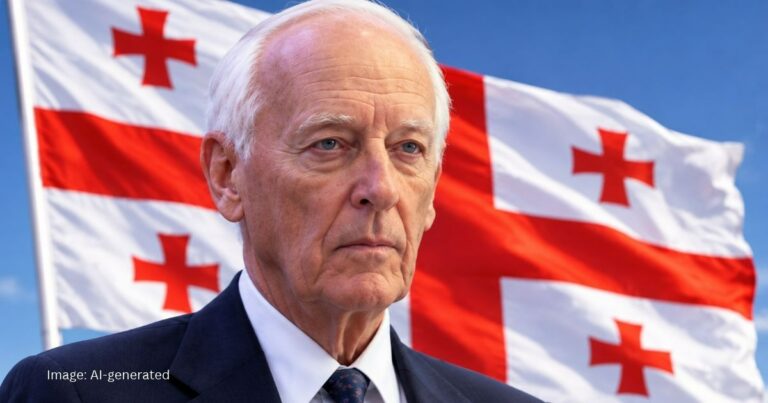
General Sir Garry Johnson had passed away. Georgia has lost a steadfast supporter, a demanding mentor, and a man who took our independence and our future seriously.


This commentary examines the scale and mechanisms of Russian online influence operations in the context of Ukraine’s strikes on Russian Yandex data centres and the subsequent claims of declining bot activity. It questions whether disruptions to digital infrastructure can significantly weaken foreign influence and explores…


Poland's latest central-bank appointments have resolved a management-board staffing dispute while creating vacancies on the Monetary Policy Council. With parliament preparing to consider proceedings against governor Adam Glapiński, the reshuffle highlights a legal question: who can make binding monetary-policy decisions if the governor cannot participate?…


Recent bomb threats disrupting European flights, cyberattacks targeting civilian infrastructure and reports of unidentified drones raise questions about the strategic significance of seemingly isolated incidents. This commentary examines how operational disruption can become an instrument of subversion, exploiting vulnerabilities in human security to undermine public…


The EU’s disinformation strategy has built strong detection and institutional-response capacity, but it has left citizens’ critical-thinking skills underdeveloped: citizens report awareness of disinformation without necessarily being equipped to recognise how it works. Drawing on Eurosceptic rhetoric in Italy, this brief argues that disinformation is…


The Democrats' return to control of both chambers of Congress changes the political balance in Washington. But what does it mean for America's role in the world? Will congressional resistance make Trump's foreign policy more predictable, or merely more complicated? Will it constrain his transactional…
The midterms have changed the balance of power in Washington. Democrats now have the House and the Senate. That puts President Trump in a very different position in the final two years of his term. Congress will have a far greater ability to scrutinise the…


Cyberattacks on commercial refrigeration systems raise questions about the everyday dependencies that connect European societies. This opinion paper considers how shared vulnerabilities might contribute to a sense of European belonging, while distinguishing confirmed incidents from uncertain attribution and possible psychological effects. It argues that belonging…


Individual responsibility, evidence and operational effects Executive summary Targeted sanctions turn attribution into a decision about individual responsibility. This policy brief examines whether the EU framework for Russia’s destabilizing activities can support that decision when foreign information manipulation and interference (FIMI) operations involve intermediaries and…


Georgia missed its 2023 deadline to implement European emergency oil-stock rules. A draft examined in 2025 proposed postponing a key stockholding decision until 2030. Meanwhile, Russia remained Georgia’s largest individual supplier of gasoline and diesel in 2026. This commentary examines what Georgia’s reporting gaps, Montenegro’s…
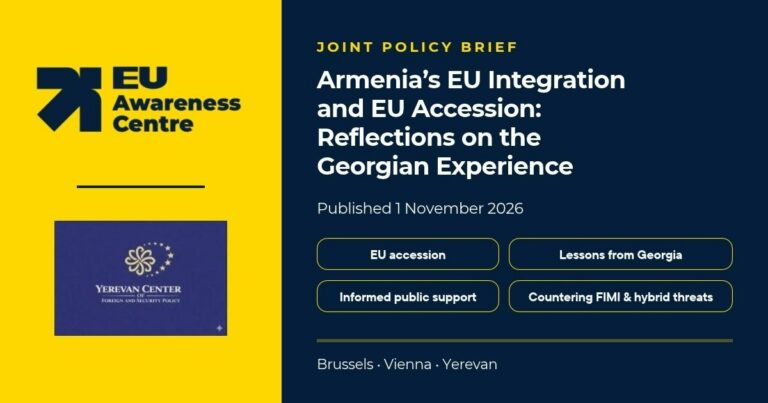
Joint policy brief by the EU Awareness Centre and the Yerevan Center of Foreign and Security Policy. Armenia has announced it will prepare an EU membership application. The brief draws lessons from Georgia’s experience, where progress stalled despite around 80% public support. Its central finding…
Poland's latest confrontation over the Constitutional Tribunal raises a question that goes beyond the immediate dispute between the government and the president: how can a country restore the rule of law after years of political conflict over its institutions without creating new doubts about the…


The prolonged war in Ukraine has irrevocably dismantled the post-Cold War illusion of permanent European stability, signaling a definitive return to industrial-scale warfare and unapologetic great-power competition. For decades, the dominant Western strategic paradigm rested on the principles of liberal internationalism, the assumption that deep…

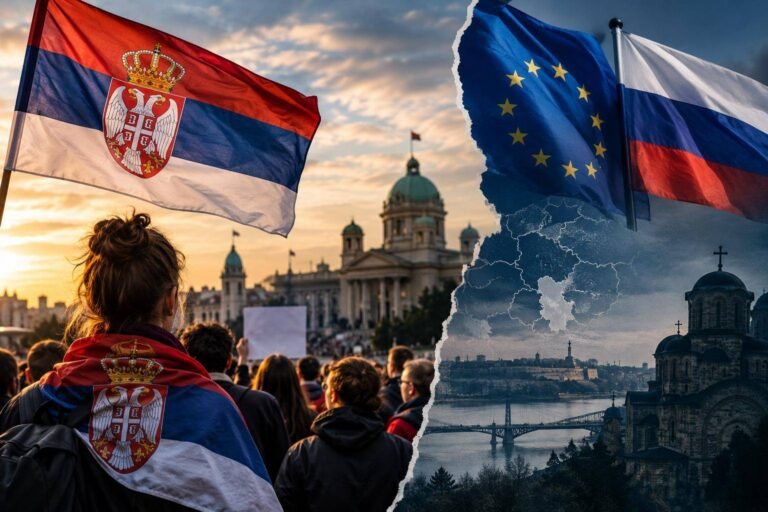
Aleksandar Vučić's electoral defeat is a watershed moment in Serbian politics. He stepped down as president in September to run as the SNS list's candidate for prime minister. On 25 October he was voted out. The Student List (which emerged from nearly 2 years of…
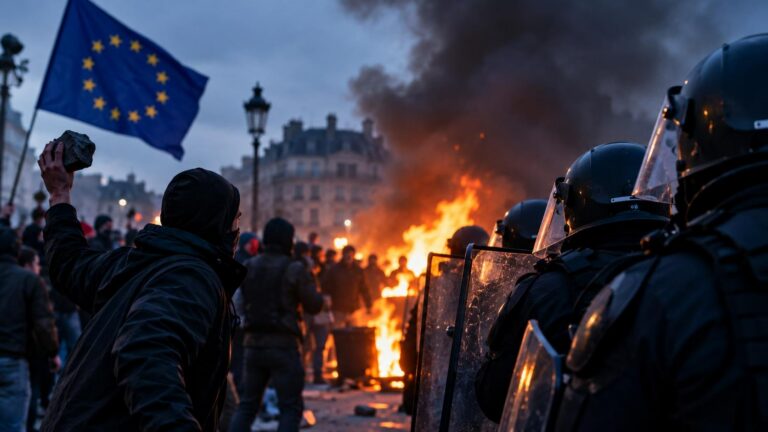
On 17 October, more than half a million people marched across France against the high cost of living. Most of them marched peacefully and then went home. But by the evening, the town hall in Limoges was on fire, there was tear gas in Paris,…
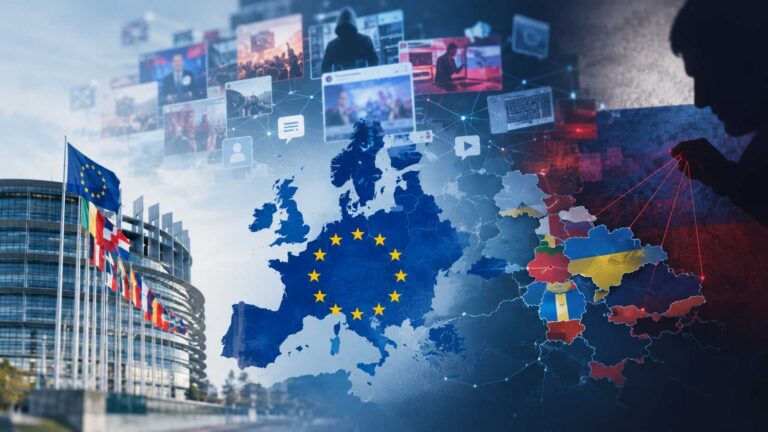
A comparative analysis of Russian Foreign Information Manipulation and Interference in EU Member States and the EU’s eastern neighbourhood (January 2025 to October 2026) — examining objectives, toolkits, laundering models, regional patterns and the limits of resilience. Executive Summary Russian information operations accompanied elections across…